

Rhodiola has been taken for tiredness for centuries, in places where winters are long and work is hard. Today it shows up in capsules, teas and drinks, usually with the word adaptogen on the label and a promise of calm energy beside it.
As a neuroscientist, I find rhodiola one of the more interesting herbs, and also one of the most oversold. The trials that exist point in a promising direction. Most of them are small, short and run on one or two branded extracts. This guide sets out what is known, what is not, and how to use it sensibly if you decide to try it.
What rhodiola rosea is
A cold-climate root with a long history
Rhodiola rosea, also called golden root or rose root, is a flowering plant that grows in cold regions and at high altitudes across Europe, Asia and North America. The part used is the root. According to Memorial Sloan Kettering, it has a long history in traditional medicine in Eastern Europe and Asia for physical and mental performance and for low mood; NCCIH adds endurance, fatigue and altitude sickness to the traditional list.
Two groups of compounds get most of the attention: rosavins and salidroside. Quality extracts are standardized to a set percentage of each, which is how you can compare one product with another. Rhodiola is often called an adaptogen, a traditional term for a plant thought to help the body handle stress. It is a useful label for the idea, not a medical category.
Rhodiola benefits for mental fatigue
Where it may help, & where it is oversold
The rhodiola benefits people care about most are less mental fatigue and steadier concentration under stress. Those are also where the trials point. Short courses have been tested in students during exams, doctors on night shifts and adults with stress-related exhaustion, and several reported less fatigue or better scores on mental tasks.
Key idea
Rhodiola looks most useful for people who are already worn down by stress, and least proven for a healthy person hoping to feel sharper.
Mental fatigue is not the same as brain fog, though they overlap; brain fog vs mental fatigue explains the difference. And mental fatigue has a biology of its own. One explanation we find persuasive is that hours of demanding work leave chemical by-products in the parts of the brain that handle control and choice; read how glutamate builds up for that research.
Where rhodiola is oversold: claims that it boosts intelligence, burns fat, treats depression on its own or works for everyone. None of those is supported by the evidence below.
What the research shows on rhodiola & focus
Five trials worth knowing, & their limits
So what does rhodiola do in people? The best-known trials, in date order:
- Darbinyan and colleagues, 2000: 56 young doctors on night duty took one low-dose tablet a day or placebo for two weeks, then switched. A fatigue index built from tests of memory, calculation and concentration improved during the first two weeks of rhodiola.
- Spasov and colleagues, 2000: students in an exam period took a low dose or placebo for 20 days. Mental fatigue and well-being improved; some tests did not change, and the authors thought the dose was probably too low.
- Olsson and colleagues, 2009: 60 adults with stress-related fatigue took 576mg a day or placebo for 28 days. Burnout scores and some attention measures improved more than with placebo.
- Lekomtseva and colleagues, 2017: 100 people with long-running fatigue took 200mg twice a day for eight weeks. Fatigue fell, most in the first week. There was no placebo group, so this shows a pattern, not proof.
- Ishaque and colleagues, 2012: a review of 11 trials. Three of five trials on mental fatigue were positive, but every study had a high or unclear risk of bias, and the authors called the evidence contradictory.
What about rhodiola for energy in the everyday sense, a lift on a normal Tuesday? That is the weakest part of the evidence. Most trials enrolled people under clear strain, used one or two branded extracts and ran for weeks, not hours. NCCIH's summary is blunt: there is not enough reliable evidence to say whether rhodiola is useful for any health purpose, and most research in people is of low to moderate quality.
Rhodiola rosea dosage
The doses the trials actually used
There is no official rhodiola rosea dosage, and none of this is a prescription. What the trials used is a fair guide to what has been studied:
- Low daily doses of a standardized extract, one tablet a day, in the Darbinyan and Spasov trials.
- 400mg a day (200mg twice daily) for eight weeks in the Lekomtseva trial.
- 576mg a day for 28 days in the Olsson trial.
The doses that matter are doses of a standardized extract, not of raw root powder, which varies a lot. NCCIH describes rhodiola as possibly safe for up to 12 weeks, which is longer than most trials ran. Longer use has less data behind it. If you take medicines, ask your doctor or pharmacist about the dose before you start.
Best time to take rhodiola
Morning or early afternoon, not bedtime
The best time to take rhodiola is earlier in the day. Trials gave it as a daily dose during working or study periods, and NCCIH lists insomnia among its possible side effects. That makes morning or early afternoon the sensible window, and evening the one to avoid.
When to take rhodiola also depends on what you want from it. If the goal is to get through a hard afternoon, with breakfast or lunch is a practical choice. Effects in the trials built over days to weeks, so taking it at the same time each day matters more than the exact hour. Give it two to four weeks before deciding it does nothing.
"Consistency beats timing. A herb studied over weeks will not tell you much in a day."
Rhodiola side effects & who should skip it
Who should check first, or skip it
Most people in the trials tolerated rhodiola well. Reported rhodiola side effects include dizziness and dry mouth (Memorial Sloan Kettering), and headache, trouble sleeping and either dry mouth or extra saliva (NCCIH).
The bigger issue is medicines. The Memorial Sloan Kettering herb profile advises caution for anyone taking antidepressants, citing a case of a fast, irregular heartbeat when the two were combined. It notes that rhodiola may affect how the body handles warfarin and the seizure medicine phenytoin, and, because it has some MAO-inhibiting activity, may add to the effects of blood pressure medicines and stimulants, with the clinical importance not yet known. NCCIH also reports an interaction with losartan.
Skip it, or ask first, if you:
- Take an antidepressant, a blood thinner, seizure medicine, blood pressure medicine or a prescription stimulant.
- Are pregnant or breastfeeding; NCCIH says little is known about safety then.
- Have a mood disorder or are being treated for depression. Rhodiola is not a substitute for that care.
How to choose a rhodiola supplement
Reading a label before you buy
Choosing a rhodiola supplement is mostly about the label. Look for:
- The species: Rhodiola rosea specifically, the species used in the trials above.
- Standardization: a stated percentage of rosavins and salidroside. Without it, two products with the same milligrams can contain very different amounts of the compounds that were studied.
- A stated dose: milligrams of extract per serving, so you can compare it with the trials above.
- Testing: evidence of third-party testing or manufacture in a certified facility.
- Restraint: be wary of products promising to treat anxiety, depression or anything else. Supplements cannot legally claim to treat disease, and the evidence does not support it.
A product that hides rhodiola inside a blend without an amount tells you less. That includes ours, as the next section explains.
Rhodiola in Numin
One of five, chosen for a reason
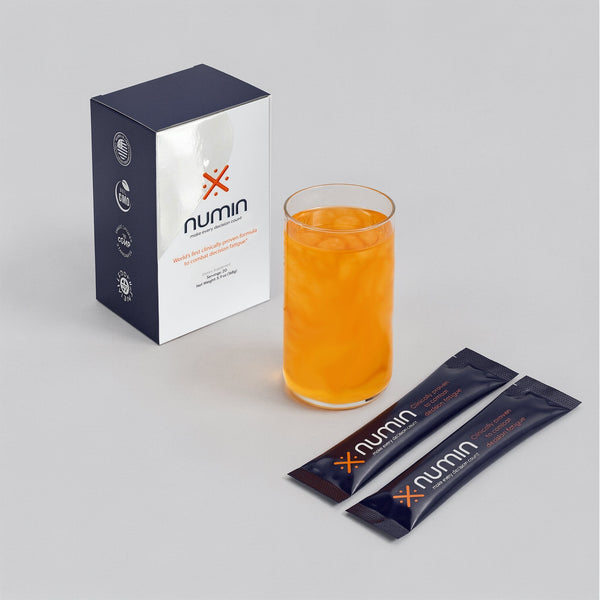
Numin contains rhodiola as one of its five named ingredients, alongside chromium, MSM, L-tyrosine and Curcugen turmeric extract. On the label it is Rhodiola rosea root extract standardized to 3% rosavins and 2% salidrosides, inside a 5.85g Numin Decision Blend. Numin does not disclose how much rhodiola is in each stick, so we cannot tell you how it compares with the trial doses above. Numin describes rhodiola's role in the formula as neuroprotection; read about the five ingredients in Numin for the reasoning.
As a whole, Numin supports the brain's natural glutamate clearance system, aiming to keep decision quality at baseline through the afternoon rather than lift it above. In Numin's trial, a randomized, placebo-controlled crossover pilot, Numin reports 43% fewer decision errors than placebo. It was one trial of 23 competitive gamers, funded by Numin's parent company, and the decision fatigue scale and nine cognitive tests were not statistically significant. It tested the formula, not rhodiola alone.
Numin's rhodiola supplement drink has no caffeine or sugar. Mix one stick in water 30 to 60 minutes after lunch, and skip it after 4pm. The medicine cautions above apply to Numin too.Rhodiola rosea benefits questions
Straight answers
The questions people ask most about rhodiola rosea benefits.
What is rhodiola good for?
In small trials, rhodiola has been most useful for mental fatigue under stress: night shifts, exam periods and stress-related exhaustion. Evidence for focus or energy in healthy, rested people is weaker, and reviewers rate most of the trials as low quality. It is not a treatment for any condition.
How long does rhodiola take to work?
In the trials, effects showed up over one to four weeks. An open-label study saw the biggest change after one week, and a night-shift trial found improvements within two weeks. Take it daily at the same time for a few weeks before judging it.
Can you take rhodiola every day?
Trials ran for up to about eight weeks, and NCCIH describes rhodiola as possibly safe for up to 12 weeks. Beyond that there is little data. If you take medicines or plan to use it long term, talk to your doctor first.
Does rhodiola contain caffeine?
No. Rhodiola does not contain caffeine and is not a stimulant in the way caffeine is. NCCIH does list insomnia as a possible side effect, so take it earlier in the day. Memorial Sloan Kettering also notes it may add to the effects of stimulant medicines.
More on decision fatigue & brain fog
Keep reading
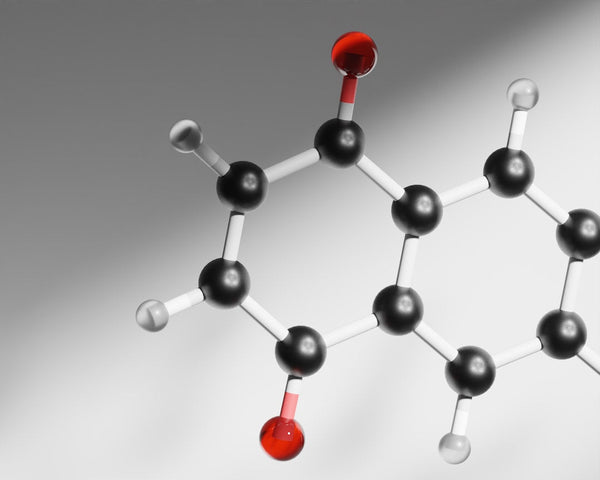
The Science
What glutamate does in the brain, & why too much slows your thinking
What is glutamate? The brain's main excitatory neurotransmitter. What it does, why clearance matters more than production, and how MSG differs.
 Dr. Shawn Watson ·
Decision Frameworks
How to quit caffeine & keep your edge
How to quit caffeine without a week of fog at your desk: count your real intake, drop the afternoon cup, taper slowly and plan around the withdrawal dip.
Dr. Shawn Watson ·

Brain Fog & Mental Fatigue
What mental clarity actually is, measured rather than felt
What is mental clarity, measured rather than felt? A neuroscientist defines it, separates it from focus and energy, and explains why it fluctuates.
Dr. Shawn Watson ·