

TL;DR
- Every switch leaves attention residue that drags on the next task.
- Finish or park the current task before you move on.
- Batch shallow work and guard one block in your clearest hours.
Context switching is the cost your brain pays each time it drops one task and picks up another. Part of the cost is time: reloading the goal, the rules and where you left off. The larger part is harder to see. Some of your attention stays with the task you just left, and the next one gets less of you than it appears to.
A single switch is cheap. The problem is volume. A working day built from messages, meetings and quick requests can hold dozens of switches an hour, and each one draws on the same prefrontal systems that handle judgement. By mid afternoon, the switching has spent capacity that your consequential decisions were counting on. The six steps below cut the number of switches, lower the cost of the ones you cannot avoid, and move your best thinking into the hours when it is cheapest to do. If poor focus is constant, starts when you wake, or comes with low mood, raise it with a clinician first.
What you'll need
- 30 minutes – for a one-morning switch count
- A notepad – to tally switches and park tasks
- A calendar – to block one focus window a day
- Numin – optional, one stick pack after lunch
Nothing here requires new software. The one change that matters is agreeing with yourself, in advance, which hours of the day belong to deep work and which belong to everything else.
Step 1: Count your switches
Most people underestimate how often they switch, because each switch feels like part of the work rather than an interruption to it. Checking a message mid draft, glancing at a dashboard during a call and answering a quick question on the way back from a meeting are all switches. So the first step is measurement, not willpower.
Pick one ordinary morning. Keep a notepad beside you and make a tally mark every time your attention moves from one task to a different one, whether you chose to move or something pulled you. Mark who started it: you, a notification, or another person. Do not change your behaviour while you count, because the aim is an honest baseline.
At lunchtime, look at two numbers. The total tells you the scale of the problem. The split tells you where to act: self-started switches respond to habits, while notification and people-driven switches respond to settings and agreements. Our attention leak audit goes further if you want a fuller picture.
Tip
Count for one morning, not one week. A single honest morning shows the pattern, and a longer log tends to change the behaviour it is trying to measure.
Step 2: Close the loop first
The hidden cost of a switch is what the organisational researcher Sophie Leroy called attention residue. In studies published in Organizational Behavior and Human Decision Processes in 2009, people who moved on to a new task while the previous one was still unfinished kept thinking about the old task and performed worse on the new one. Finishing the first task before switching reduced the residue.
That points to a simple rule. Before you leave a task, either finish the piece you are on or park it properly. Parking means writing one line that says exactly where you stopped and what the next action is: "Section three drafted, next check the Q2 figures." The note tells your brain the task is safely held, which gives it less reason to keep returning to it while you do something else.
The rule matters most for the switches you cannot refuse. A call you have to take or a manager who needs an answer now will still pull you away, but thirty seconds spent writing the parking line first means you leave less of yourself behind. The same logic sits under why the interruption is the problem, not your ability to handle it.
- Finish the smallest complete piece before you switch.
- If you cannot finish, write where you stopped and the next action.
- Return to the note first, not the inbox, when you come back.
Step 3: Batch shallow work
Some switching is built into the shape of the day. Email, chat, approvals and small admin tasks arrive in a steady trickle, and answering each one as it lands turns the whole day into a string of switches. Batching reverses that. Instead of handling shallow work continuously, you handle it in two or three fixed windows and leave it alone between them.
The research on task switching explains why this helps. In experiments published in the Journal of Experimental Psychology: Human Perception and Performance, Rubinstein, Meyer and Evans found that switching between tasks cost measurable time, and that the cost grew as the tasks became more complex or less familiar. Every switch requires the brain to swap one set of goals and rules for another, and that reconfiguration is work.
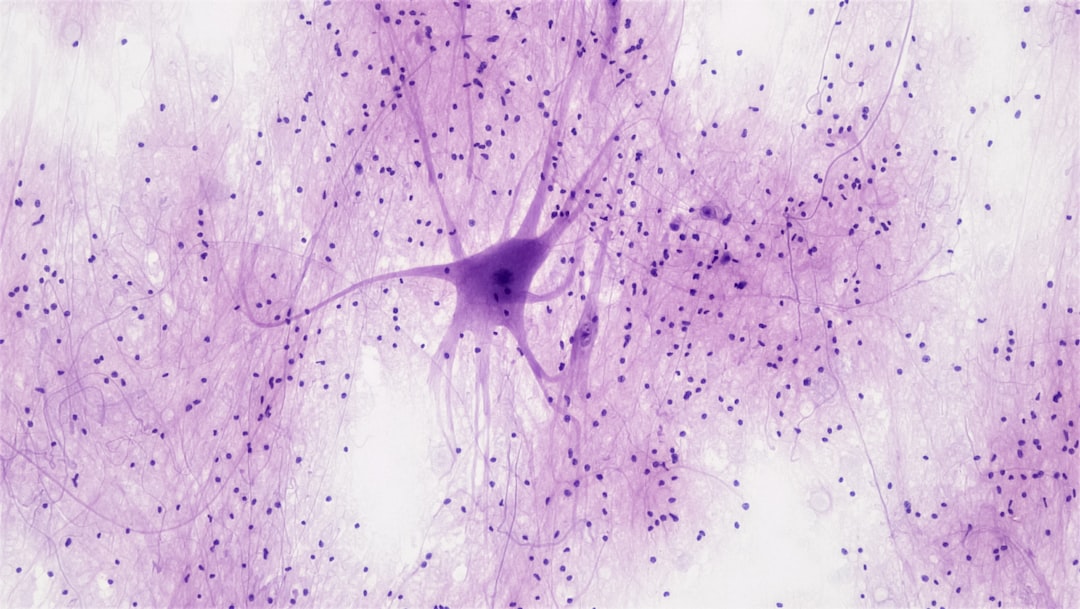
Batching keeps the reconfiguration to a handful of times a day. Grouping similar tasks helps as well: replies with replies, reviews with reviews. Moving between two tasks of the same kind costs less than moving between two unrelated ones. For more on why the brain alternates rather than truly multitasks, see multitasking vs focus.
Step 4: Guard a focus block
Cutting switches everywhere is unrealistic, so concentrate your effort on one window. Choose a single block of 60 to 90 minutes a day for the work that most needs judgement: the analysis, the plan, the difficult decision. Put it in your calendar as a meeting with yourself, and defend it the way you would defend a meeting with a client.
Place that block early. Every decision fires glutamate in the lateral prefrontal cortex, the region that handles planning and comparison, and when it accumulates faster than the brain clears it, signalling becomes less efficient. A morning block runs on a system that has not yet been worked. An afternoon block runs on whatever the morning left behind, which is why back-to-back meetings cost so much more than their calendar time suggests. The mechanism is set out in the prefrontal cortex explained.
Inside the block, work on one thing. If a new idea or task surfaces, write it on the notepad and keep going. The block only works if it is protected from the small switches as well as the large ones.
Step 5: Mute the interruptions
Many switches are not chosen at all. A notification lights up, a message pings, a colleague leans over. In a laboratory study presented at CHI 2008, Gloria Mark and colleagues found that people who were interrupted finished their tasks in less time with no loss of quality, but reported significantly more stress, frustration, time pressure and effort. Interruptions often do not look expensive in the output. They show up in what the work costs the person doing it.
So reduce the triggers rather than relying on resistance. Turn off notifications for everything that is not time critical. Close email and chat during the focus block. Agree a simple signal with the people you work with for when you are heads down, and a way to reach you for genuine emergencies, so muting does not feel risky.
Watch out
Silence is not the same as being unreachable. If muting leaves people unsure whether you will ever reply, they will interrupt you another way. Tell them when your next batch window is.
Keep the settings in place for a week before you judge them. The first days feel odd. After that, most people find the quiet hours are where the day's best work comes from.
Step 6: Protect the afternoon
Even with fewer switches, the afternoon arrives carrying the morning's load. Two structural moves help. Schedule the shallow batches, not the decisions, after lunch. And look at how many decisions you make each day so the ones that matter sit before the count gets high.
Structure has a ceiling, though. Most roles cannot push every consequential call into the morning, and no calendar discipline changes the accumulation underneath. That gap is what Numin was built for: a stimulant-free powdered drink that supports the brain's natural glutamate clearance system, so decision quality holds through the afternoon rather than falling away. It prevents a decline from your own baseline rather than pushing you above it.
The evidence is a randomised, placebo-controlled crossover trial published in Frontiers in Nutrition in 2025. Twenty-three healthy adults completed two 13-hour sessions of sustained competitive cognitive load, seven days apart. On Numin they made 43% fewer decision errors than on placebo and held baseline to the end, while the placebo arm declined significantly after about four hours. There were zero adverse events. The limits matter too: 23 people, one trial, a competitive-play population. The five named ingredients are on the Numin science page. In practice, one stick pack in water 30 to 60 minutes after lunch, and nothing after 4pm. Numin is not a treatment for ADHD or any other condition.
Tip
Before you finish today, block tomorrow's focus window and write the one task that goes in it. Starting the day with that decision already made removes the first switch.
Frequently asked questions
What is context switching in humans?
How expensive is context switching?
How much time does context switching waste?
What is context switching fatigue?
More from the Numin journal
Keep reading

Decision Fatigue
Context Switching vs. Multitasking: Why Your Brain Pays a Hidden Tax on Every Switch
Every time you switch tasks, your brain pays a measurable cost in time, accuracy, and executive control. Here's the science and a smarter way to work.
Read article
Decision Fatigue
Why Back-to-Back Meetings Destroy Decision Quality (And What to Do About It)
Back-to-back meetings drain your judgment. See how decision fatigue at work erodes choices and simple ways to protect your decision quality.
Read article
Decision Fatigue
The Attention Leak Audit: How Micro-Distractions Drain Your Decision Quality
Every notification and tab switch costs your brain more than you think. Research shows repeated interruptions raise cognitive load and degrade decision quality. Run this 15-minute audit to find your...
Read article